Vinyl Flake Broadcast, Blend and Chip Size
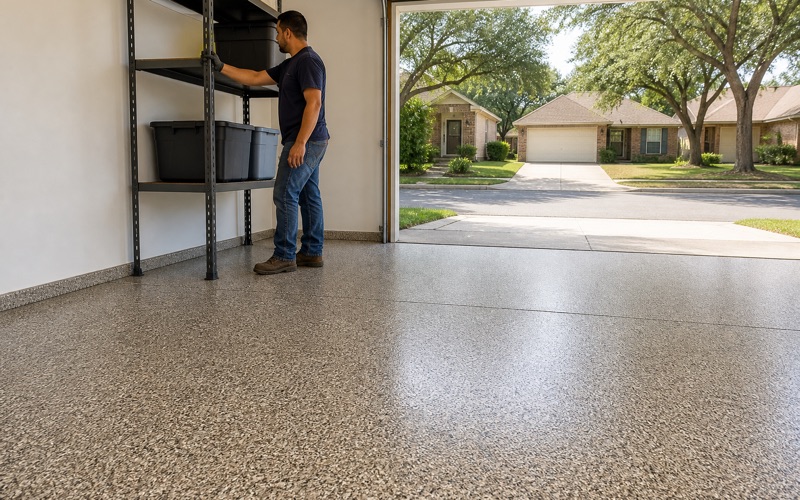
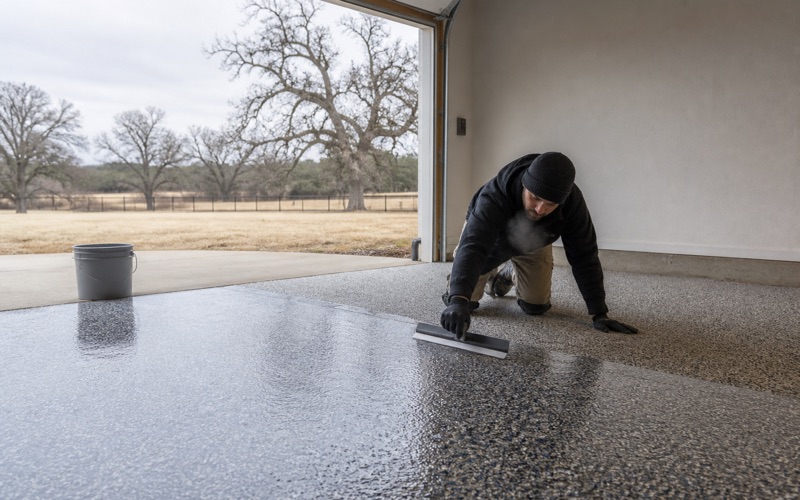
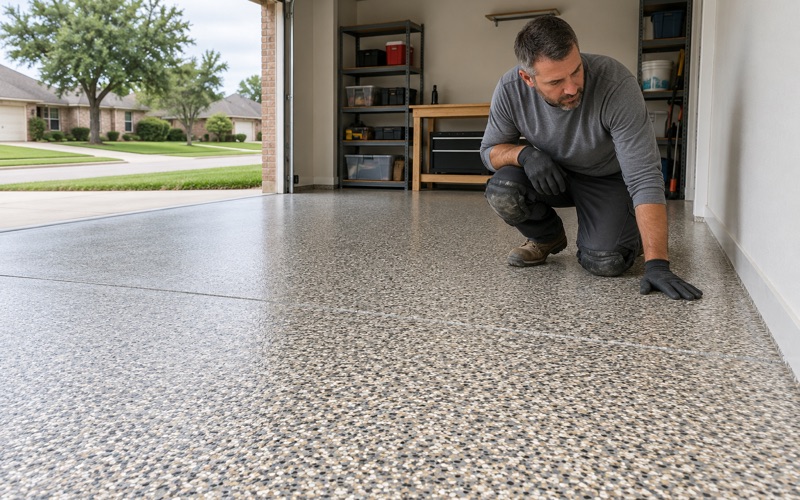
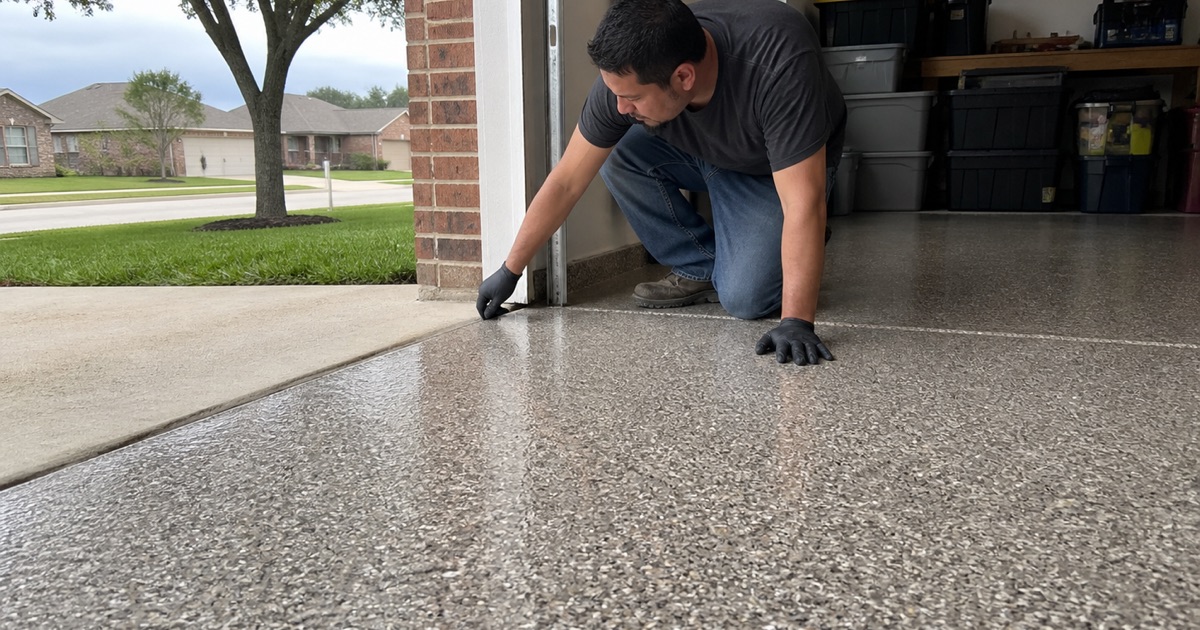
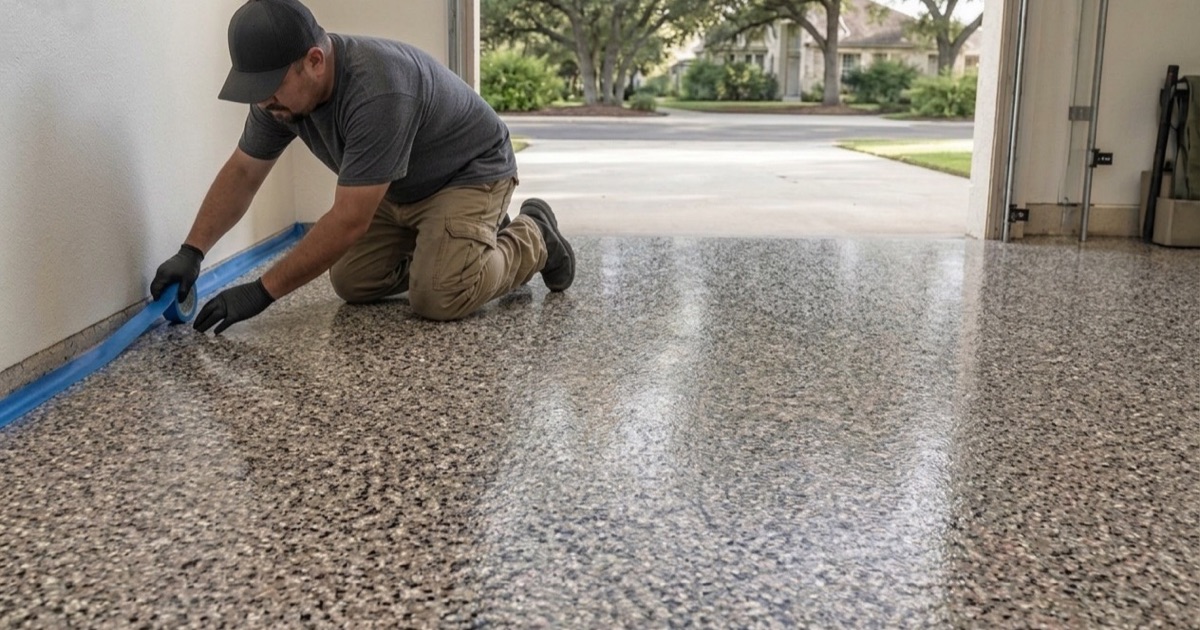
A vinyl flake floor is chip broadcast into a wet base coat and locked under clear topcoats. Chip size drives how busy it reads, since a quarter-inch chip looks like texture across a room while a one-inch chip reads as pattern, and broadcast rate decides whether you see the base color at all. A full-refusal broadcast hides the slab completely.
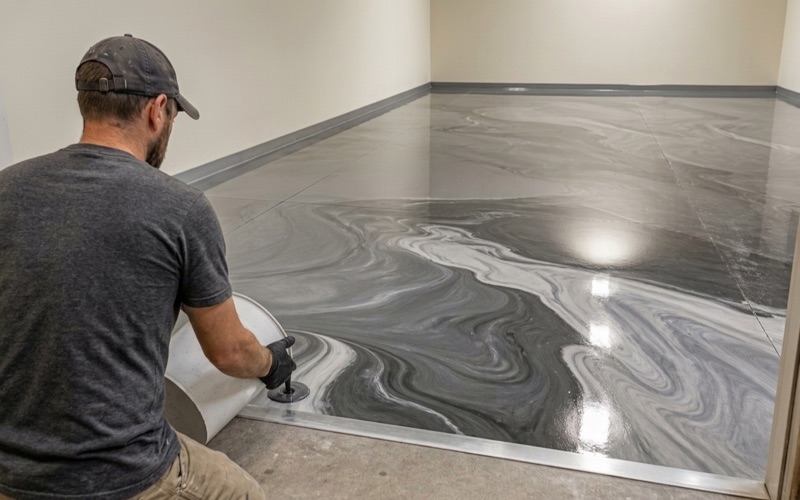
A metallic floor is pigment suspended in a clear 100% solids epoxy and moved with rollers, brushes and air while it is still wet, so the pattern is made during the pour and cannot be corrected afterward. It needs a level, well-primed slab and a crew that has done it before, because every seam and every stop shows in the finished marbling.
Polished Concrete and Aggregate Exposure
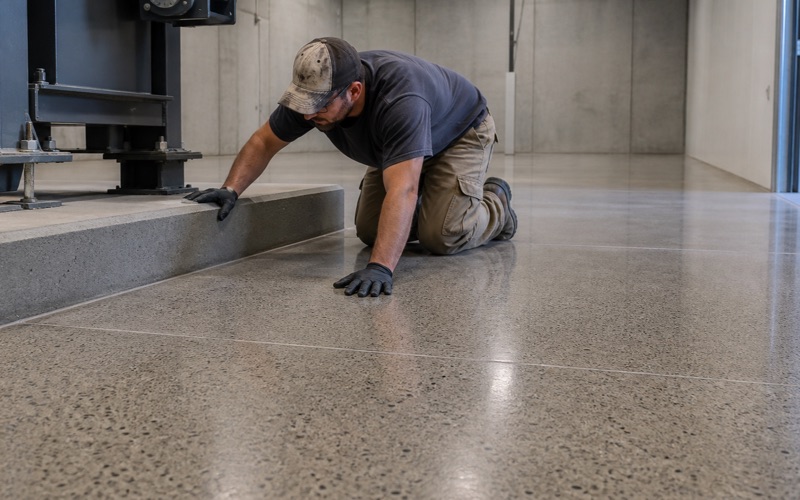
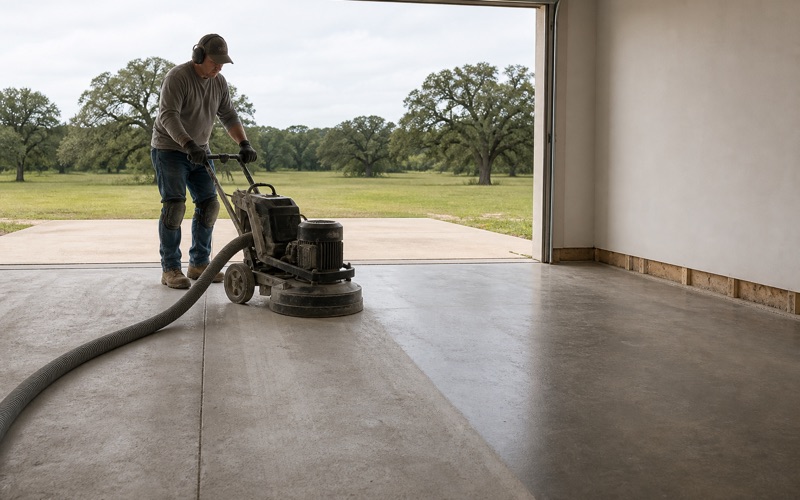
Polished concrete is mechanical rather than a coating: progressive diamond grits with a lithium silicate densifier, ground to a chosen exposure. A cream finish keeps the surface paste, a salt-and-pepper cut opens fine sand, and a full aggregate exposure shows the stone. That decision is made in the first grinding pass and cannot be changed later.
Gloss, Satin and Matte in a Working Garage
Gloss reads deepest and shows every tire mark, footprint and speck of dust. Satin gives most of that depth with far less of the upkeep, and matte hides the most while making a spill harder to spot. In a garage that gets used we usually steer people to satin, because the floor that photographs best is not the floor that looks best in March.
Quartz Aggregate Broadcast for Color and Grip
Quartz broadcast uses colored ceramic-coated quartz instead of vinyl chip, so the color sits in a hard aggregate that also provides the texture. It builds thicker than flake, takes more abuse, and delivers slip resistance and color in one operation, which is why it turns up in commercial kitchens, locker rooms and entries rather than in living spaces.
Solid Color Coatings and When Plain Is Right
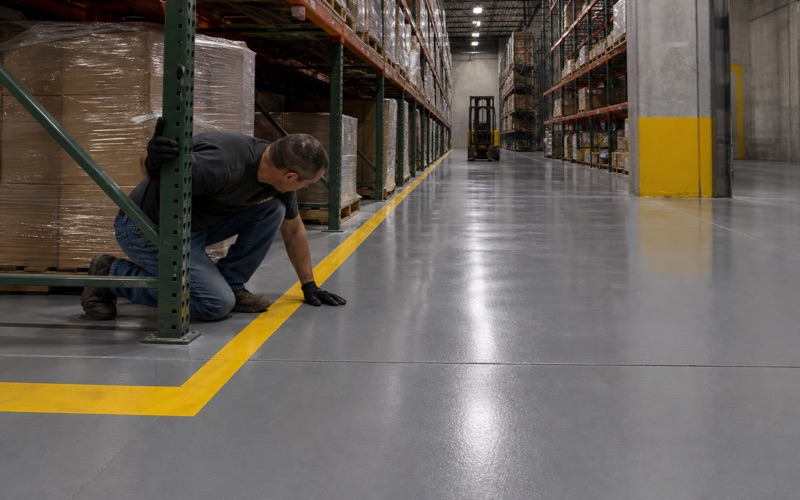
A solid color 100% solids epoxy under a clear topcoat is the plainest system we install and often the correct one. Pattern hides dirt, and plain shows a leak the day it starts, which is exactly what you want in a shop bay, under equipment, or anywhere the floor works as a diagnostic surface rather than a decorative one.
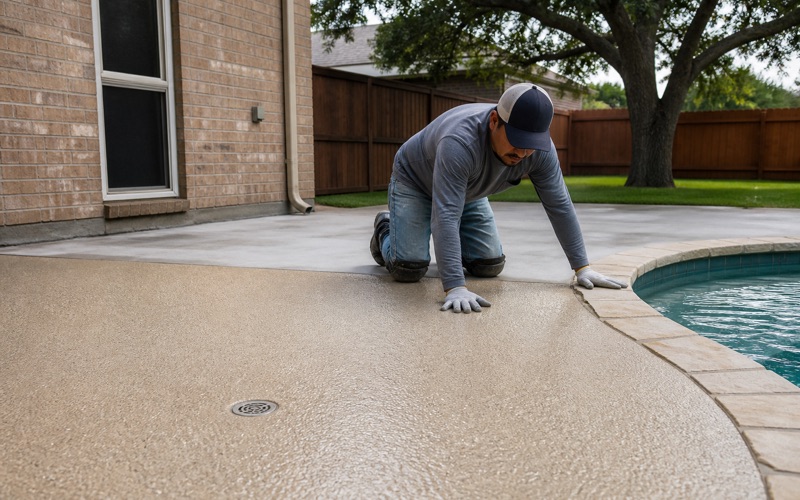
A pool deck is walked on barefoot in August, so color is a comfort decision before it is a style one, and a dark surface on a slab already running well above air temperature is unpleasant in a way a garage floor never is. We build these with a textured, ultraviolet-stable system and keep the value light.
Ultraviolet Stability and Ambering Outdoors
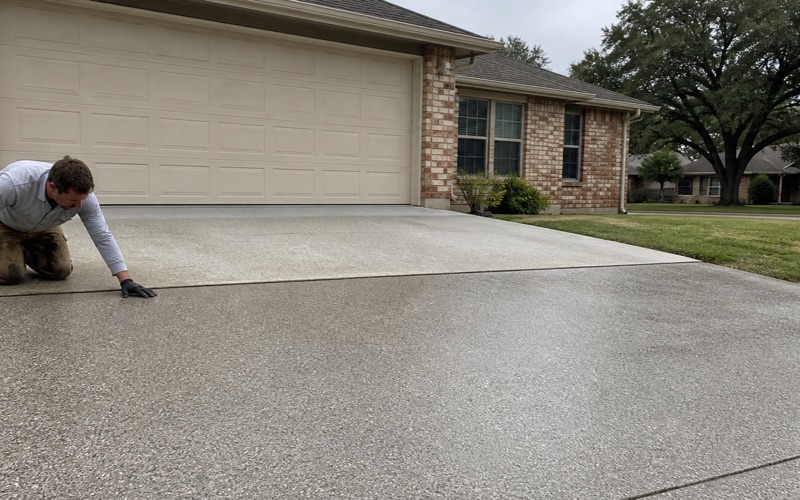
Epoxy is not ultraviolet stable and ambers under direct sun, which is invisible under a dark flake blend and obvious under white or gray. Anything outdoors, or inside a garage that spends the afternoon with its door open, gets a polyaspartic or polyurea topcoat that holds its color rather than an epoxy topcoat that will not.
Saw-Cut Lines, Borders and Inlaid Logos
Control joints can be honored as a design line rather than hidden, and we saw-cut deliberate lines, borders and bay divisions where the layout wants them. Inlaid logos and color bands are set between coats so they sit under the clear rather than on top of it, which is the difference between a graphic that wears off and one that does not.